Final Day in Karen: Kazuri Beads and Life as a Farmer
After a 7:30 am breakfast and a 9 am check-out, I sat in the visitors area reading a book about an Irish arctic explorer. There was a peace in having no cell phone, no arrangements, no connection to the responsibilities and obligations of the world outside for only just one day. I had awoken without the assistance of a cell phone alarm as the battery had been completely dead since the day before. I had been using sparingly without the charger, turning off airplane mode for 10-15 seconds for an update every six hours or so, but now even that was out of the question, so I sat peacefully, reading and rediscovering what it was like to have no distractions; a life truly lived.
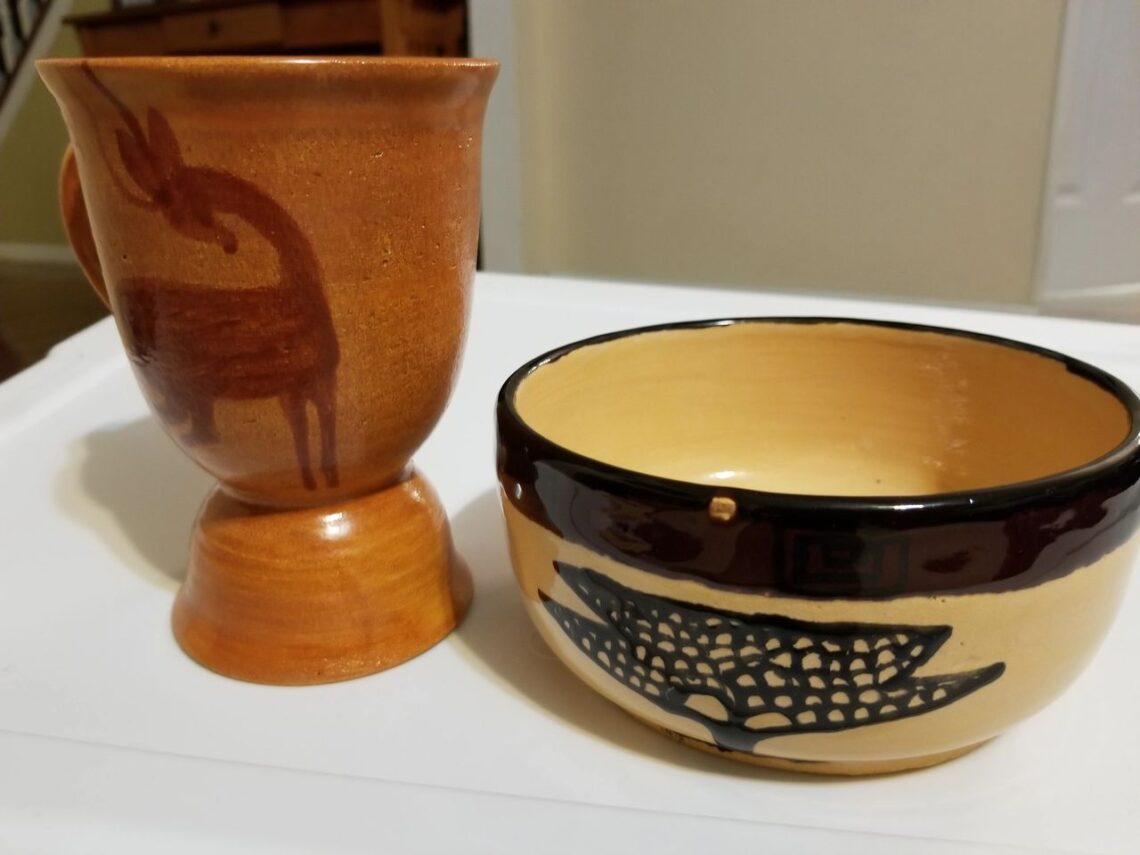
After a couple hours of reading, it was time to head out for an adventure. I did not have enough shillings left to pay a driver, so this journey would have to be embarked upon by foot. I had purchased a bowl (my “Kenyan bowl”) on the last trip from Kazuri (meaning ‘small and beautiful’ in Swahili) that had served as my bowl for nearly every meal since. I still hand wash this very bowl after each meal, each day, though I have put a couple of chips in it over time. I started with a jog, feeling that maybe jogging, getting some blood flowing, would help to clear my ears and help the medicine do its job by facilitating enhanced blood flow. I jogged, only knowing the general direction and having a desire to explore until I reached my intended destination.
I ran along the road on uneven terrain, brushing plants and narrowly escaping brushes with passing cars. At one point I even was slashed by a huge, saw-edged plant that had the appearance of overgrown aloe vera. As I looked down at my bleeding hand, a deadly-looking thorn bush protruded into my path which I hurdled all while a car whizzed past at speed within centimeters of my hurdling jump. It was at this point that I decided, “Maybe I better walk…and walk a bit away from the road.” It was only at a couple of points over the 30-or-so minute journey that I asked for a kind point in the right direction which the Kenyans so graciously provided with a smile.
I walked in through the gates of the world-famous Kazuri bead factory. I spent the next 45 minutes looking around at the hand-crafted materials, trying to decide how much I could reasonably spend in $ USD and still fully pay for a ride back to the airport since the driver the Mary Ward Centre arranged was requesting more Kenyan shillings than I had remaining. The products were incredible, as I had remembered them being the last time we visited. I decided on another tried-and-true bowl as well as a cup for my father as every attempt to get a Tusker item had resulted in misaligned expectations between the vendor and me.
I walked home, tipping a kind lady that had pointed me in the right direction on the way out to Kazuri expecting nothing in return yet sharing a huge smile. She was overjoyed by my tip and was talking aloud about her thankfulness for the tip to another visitor who was at her roadside fruit stand. I arrived back at the gates some time later in a light rain. It was time to read again, as I had decided not to take lunch on this day.
After another hour or so of reading, I decided to find a spot to enjoy nature and read. I took a walk over to the other side of the complex where the chickens and cattle were housed. It was there that I saw a man (his name was Kamau) sitting and plucking leaves (off of what he would later say was a black nightshade plant), preparing greens for the ugali meal of the visitors of the Mary Ward Centre that would come. I decided to sit with him and ask about his life. I wanted to know what it was like to be a laborer in Kenya; better yet, I wanted to know what it would be like to live connected to the land as so many of our ancestors once did. You see, Kenyans do not complain. They do not prescribe to negativity. Unlike the all-too-common voice of Hollywood and American culture in general, cursing, complaining, and words of destruction are not worked into conversation. Rather, words of celebration, joy, and hope are connected to bring about a message of empowerment, even in the most challenging of situations.
I asked Kamau, “What is your typical day?” He said something like, “I rise very early and start here at 6 am. I work through lunch as to not get tired with leisure. I finish around 6 pm. I take care of chickens and the cows every day.” I asked him if he had a family. He replied joyfully, “I have three daughters.” He was and would evermore be working 12 hour days, 7 days per week in order to provide the means to have his daughters educated and fed. He said, “I do not believe in miracles because if miracles happened, they would have happened long ago.” I replied, “That must be very challenging.” “Yes, it is challenging. It is an opportunity.”
Is it not that many of us have forgotten the value of an opportunity? As I sat there imagining the love a man had for his family, the beauty of a life spent in complete service to others, only receiving enough to survive and the appreciation of those which he supported, I could not help but think of what little expectation we have of our own capacity to provide in the western world. I also recalled the story the Uber driver told me when I asked him how much he has to drive to afford living around Nairobi; he said he had been driving 20 hours per day until they placed a limit on how many hours they could drive. Back home, I see a sea of people looking to escape their lives, drowning themselves in alcohol and pleasures each time they get the opportunity because they perceive their day-to-day lives as unfulfilling somehow. They cannot wait to lose their full awareness of the moment, their consciousness, using their abundant resources to purchase the vices that transform a life of purpose into a life of numbness. You see, a Kenyan farmer could not do that. Their life is much too important to be wasted in a semi-conscious state. Your life is much too important for this nonsense, too.
I asked Kamau if I could work with him since I had no agenda for the day and would not be leaving for another eight or so hours to head to the airport. He agreed with a smile. Another worker, this time a woman, came by and said to Kamau in Swahili, “I want green prepared by mazungu.” When Kamau translated, we all shared a laugh. It was something to think about it: how often do we forget the work that went into just one meal on our plates? The lifetime of raising a livestock for meat, the countless feedings, cleanings, the day-in-day-out process of caring for an animal, a plant, a life. We pulled these leaves for hours, making a pile fit for human consumption that barely filled a medium-sized bucket and would cook down to only a few plates full of food. We then went on to feed the chickens.
In the world of the chickens, the weakest get plucked to death by the strong. It is the “pecking order.” Kamau had segregated the pens in order that those who were seen as weak by the other chickens could survive and thrive in safety. He explained that this “weakness” could be partial blindness or otherwise, but that it was necessary to separate the chickens to ensure they could develop and survive on to productivity for the farm. After feeding the chickens, it was on to the cattle.
The cow on “lawn-mowing” duty in the front park of the farm (closest to the living quarters of the Mary Ward Centre) continuously reminded us that she was thirsty for her afternoon pail of water. By the time we got to her, Kamau said, “Too much water is not good for the calves.” The calf seemed to drink the water in a reasonable record time, sat down, and began to relax as the water hit the stomach. We continued on to the other cows in the gated pasture. Pasture may not be the best word, but it was a fenced in area with much space, low grass, and some rocks where the cattle spent most of their time.
As the farmer opened the gate he said, “Stay back, this one is a naughty one.” Not knowing what the degree of naughtiness he was concerning me about, I followed his directions, pulling back into an area of safety. The cow gently walked up to the stable, took a gentle right, then stuck its head into the feeding stock. The farmer tied the back legs to the pull to prevent the cow from kicking over the milk pail, slid a wooden board to the locked position, making a triangle around the cow’s neck, cleaned the teats and rubbed them with petroleum jelly, then went at the milking process.
Milk in the pail, floaters and all, he untied the legs of the cow, undid the triangle lock around the next, and the cow walked out of the stable to go around and grab a couple extra crumbs from its meal it had blown out of the food stock when “inhaling” the food before it. Even though food was already out for the next cow, the bony cow did not even try one nibble of the food for another cow. They knew their place well and would not take what was not rightfully their own. The cows went one-by-one through this process, none causing a disruption to any other. Any sick cows were fed but were not milked. Stressed cows do not produce much milk, so cows that were still recovering from the trauma of their previous experiences were not producing the same amount of milk as the others.
Many of these cows were in the process of being rehabilitated, nearly all of their hip bones protruding greatly in a dramatic display of undernourishment. Kamau had received these cows at close to death, and he was patiently bringing them back to health. After milking at the stocks with food, it was time to feed the cows once more with the left-overs of the (nightshade) plants that we had been plucking earlier and a block of hay. After this meal, the cows would lay down and go to sleep for the night.
As we walked back to filter the milk (basically just putting the milk through a spaghetti strainer), Kamau said, “I would be lying if I said that I did not enjoy your company today. I am so happy to have made a new friend today.” I replied, “Me too, Kamau. Thank you for allowing me to work with you today.” Earlier in the day, we had talked about coffee and Kamau mentioned how he had never been in Java House (the Kenyan equivalent of Starbucks). He said with a laugh, “If I go in there people will be suspicious. What is this man doing they will say?” He was referring to the fact that Java House, like all western goods, were grossly overpriced in comparison to the price of many goods in Kenya. I said, “Next time, I will take you to Java House. We will have a coffee together.” We shared a hug, and I left to return to the visitor’s lobby and read a few more pages in the book of the Irish arctic explorer.
Once I left the visitor’s lobby to eat a dinner (which was dramatically decreased in portion due to the lack of food I had been eating over the past few days), I would be locked out for the rest of the night. The tiny chicken drumstick (which was more skin than meat), the two small triangles of ugali which I could not stomach since I had once answered that it was fine and received it every meal thereafter, and the larger section of bitter greens like the ones that we had just plucked made for a last meal in Kenya. Sadly enough, this was a more expensive meal than my companion on the farm would be having any time soon.
As I sat out in the darkness on the curb of a parking spot, waiting with no way to verify the time, I watched life around me. Although my hearing was reduced to a loud ringing and muffled sounds of the world, I looked around. A huge beetle dropped aside me. I though it was a small animal by the crash it made. As it moved its legs at full speed trying to flip back over, I watch. The beetle, running out of energy slowed and slowed. I flipped the beetle right-side-up and it sat their without energy for another 20 minutes before slowly walking away. Sometimes we tire ourselves out when all we had to do in the first place was ask for a little help. We flail about to and fro without given another a chance to come in and give us a nudge in the right direction, to set us aright once again.
Every time I spend an extended period of time at home without exploring the world, I become like this beetle. I get agitated and my insides are thrown about as I try to get right-side up once again. Such journeys as this one to Kenya as the times where I feel somebody gently flipping me back to the way things were meant to be. It is a reminder, a peace in bringing me back to an environment where my feet are firmly placed on the ground once again. As the beetle walked away, I can see myself walking onto the plane to head home again, a place where my flying may end up flipping me over once again with a dramatic thrashing to once again find my feet. If I listen well and find patience in my heart, there may just be another opportunity to be nudged back to my feet as I rediscover what it is all about take just one more step in this life’s journey.