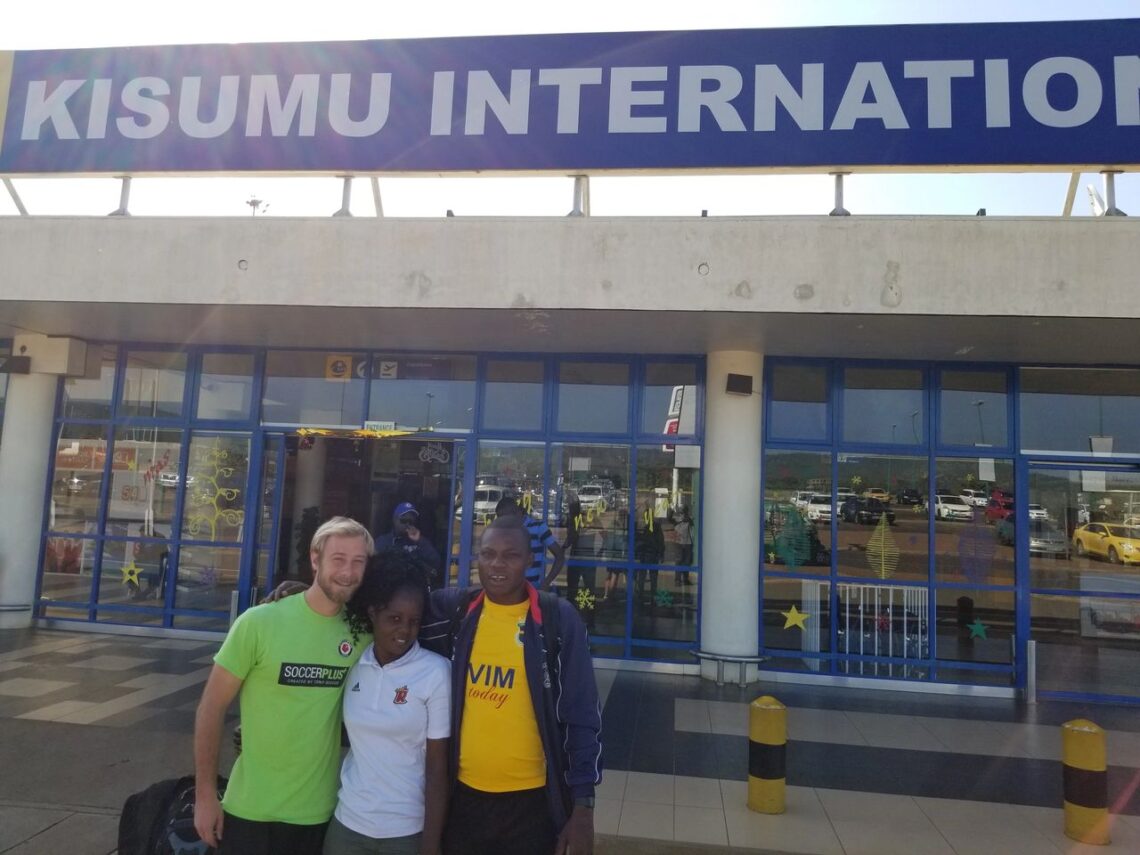
Leaving Kisumu
After a lovely breakfast and a quick morning of packing, setting Davis up with the laptop and action camera for the Kisumu Greenland SoccerPlus FC program, and finishing emails and blog posts, it was time for the last leg of the journey.
Though my cough had begun subsiding, the pressure from congestion and ringing in my ears remained. The 10:50 am flight was to be a simple one, 50 minutes at best, via Kenya Airways. As I waited in an empty line with no employees running the desk around 9:30 am, I wondered what the expectation was for check in. About 20 minutes later, a man came by and said, “Just have a seat, they are coming.” About three minutes into my sit, the employees came, and, looking up, the line was now some 10 people deep, so I waddled over with my stuffed bag of fragile items purchased from the Masai Market.
Before boarding, I stopped in the guest shop for a Tusker (the most popular brand of beer in Kenya) item. I asked the lady, “How much for this (bottle opener)?” She replied, “1500 Kenyan shillings (~$15 USD).” I said, “This is too expensive.” She replied, “1000 Kenyan shillings (~$10 USD). Buy for me because I don’t have a dad.” I walked out of the shop. It is very common to be asked to pay much more than the asking price as “mazungu” here in Kenya. It is a perception that all “mazungu” have lots of money. It is a barter system, so you can always get the price down, but the negotiation is a challenge. You would be lying if you say, “I have no more to give.” But it is also impossible to help everybody who wishes for your financial support.
It is the line between humanizing every person and avoiding situations of false hope where you open yourself to conversations that only lead to an unfulfilled wish on one side or the other. In a third world country, you run into this situation time and time again. You understand that the people could legitimately use your money to provide more for their family, but how do you decide who is “worth” helping and who falls too low on the priority list? How do you look into the eyes of someone that is suffering, somebody begging for something so small, only to give and be asked again by the next and the next and the next until you have to look into the eyes of one to whom you have nothing left to give and feel your stomach turn as you forget all the good you have done in realizing that you were no hero today, you could not save them all. And, in fact, even the ones that you have given to will only be fed for a day. What will happen tomorrow? This is why a sustainable giving is necessary. It is an exchange of life skills, a facilitation of resources that are energized by the people, transformed into life by the ambition of the one in need.
We have been given so much, and, yet, we are human. We are limited beings on a quest for the permanence of a God who fulfills all. We are a compassionate being, connecting with each other when we open our eyes. Seeing each other as we truly are; knowing each other, but only do so much to help. It will be such one great day when we can give but all of ourselves and forget the comfort that presses us to hoard up our possessions with the closed fist to surround ourselves with the objects of our own cage rather than to give to the building of community, friendship, and love.