Day 6: New Year’s Day and Visiting Judith’s Family
Originally posted on January 13, 2019 on playbeautifulsoccer.net
New Year‘s Day is a festive time in Kenya. In the town centers, children’s activities such as face painting and bouncy houses are set up to bring in glad tidings for the blessing of a new year, drawing those from near and far to participate in the joyous occasion. Along the street, people exclaim “Happy New Year!” as a greeting as you pass them on the street. For many in the Manyatta Slums, they will only have meat once per year (either on Christmas or New Years).
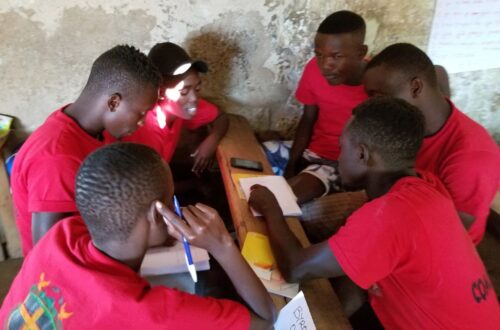
We visited the family of one of the players in Davis and Sharon’s program, Judith. Judith helped cook all of our lunches in the slums during our stay and regularly serves in this capacity at the house. Judith plays soccer and is highly-involved in Davis and Sharon’s football-for-education program.
We visited Judith’s family in the slums, walking past a myriad of children and small houses made of tightly-packed mud and/or cow dung and a network of wooden support beams firmly embedded in the material. Directly outside the house, children huddled around a small, yellow radio listening to music with the kind of childhood curiosity that seems to be spoiled in the parts of the world where access to every whim is all-too-easily met.
Judith’s mother humbly welcomed us into her home with words so quiet, they were barely audible, saying, “Karibu (Welcome in Swahili).” Those who have not gone to school typically do not speak much, if any, English. A lack of English in these areas is a sign of poverty. Davis explained how this one-room home with a bunk bed (meant to sleep her and her five children) was only on home of many the family had been to, being evicted time and time again, uprooting everything to go to another part of town only to be evicted again, sometimes with all of their few belongings locked inside as they came up short to pay rent again. At first when Judith joined Davis and Sharon’s program, Judith would come lack to trainings and miss life skills classes. When Davis inquired, he discovered that Judith was often exhausted from trying to help her mom sell maize, many nights not even making enough to supply dinner for the family, not-to-mention breaks and lunch. With no father in the picture, you have a family struggling highly to afford a meal per day and the 5000 KSH (Kenyan shillings) (approximately $50 USD) per month.
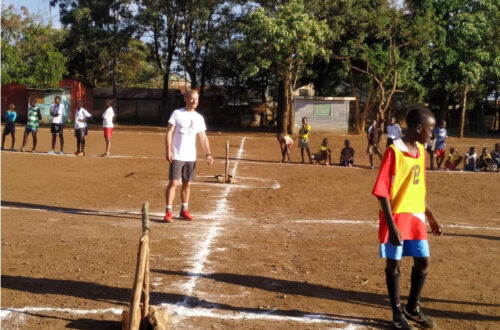
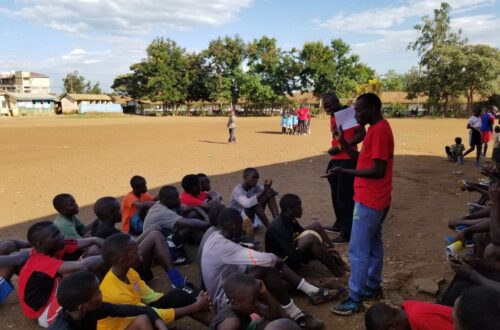
Davis and Sharon now provide Judith with opportunities to eat a lunch on school days by working various roles in the program. It is really important to realize that NOTHING is given in this program; EVERYTHING is earned. To realize that the value of your labor equates to mere pennies per day, pennies you need to survive, humbles even the strongest. Even yet, complaining is nearly non-existent. The players play on rocky fields with little dirt, no nets, used equipment, various ages of player at times, trees on the field, few balls, no water breaks, and (some times) without shoes (or in mis-sized sandals) and all you see is determination and gratitude for the opportunity. How can it be that our players in the United States are so prone to believing that they are mistreated?